
What If This Is Love?
We’ve all heard it — “You’ll just know when you’re in love.” They make it sound like fireworks, butterflies, and heart-racing drama. But what if love doesn’t knock you over like a rom-com montage?
What if it’s quieter?
What if it’s steadier?
What if it’s already here, just not dressed in the spark you were taught to expect?
This isn’t a fairy tale. This is the real, unfiltered talk you come to You’re Probably Right for — grounded in lived moments, not just feelings. If you’ve ever doubted your relationship because it’s not “passionate enough,” you might want to keep reading.
The Myth of the Spark
We’re sold the idea that love must be thrilling at all times. Movies, music, and Instagram reels show us sparks, passion, and drama as proof of “real” love. But sparks fade. That heart-racing high is addictive — and like any high, it comes down.
Real love is what happens after the butterflies land. It’s when the novelty wears off, yet you still choose them.
“The butterflies didn’t clean the toilet. The spark didn’t shovel the snow.”
It’s the everyday, unglamorous stuff:
Folding laundry while they nap.
Defending their name when no one’s watching.
Sitting through a boring family dinner for their sake.
Love Might Look Different Than You Think
Love might be:
Saying “I’ll do it” when it’s inconvenient.
Holding their hand in public even after an argument.
Protecting them in ways they’ll never know about.
Sitting in a hospital waiting room without posting a thing about it.
Sometimes love is not loud. It’s the peace of knowing they’ll be there — not just on the best days, but on the worst.
The Endless List of Acts That Say “I Love You”
From your own life, you could probably list a hundred examples. Here are a few from mine:
Vacuuming the rug without being asked.
Driving out in the snow to pick them up.
Arguing with your own parents to defend them.
Staying faithful when temptation is everywhere.
Keeping a mental list of their food allergies.
Rubbing their back during a panic attack.
Canceling plans because they need you home.
Love isn’t in grand gestures alone. It’s in the million small ones that never make it to social media.
A Love Story Without Fireworks
I once knew a couple — not flashy, not “Hallmark romantic.” He didn’t write poetry. She didn’t plan candlelight dinners. But…
He made her coffee every morning.
She folded his laundry without being asked.
He drove her to every doctor’s appointment for two years.
She packed his lunch until the day he retired.
He painted her toenails when she broke her wrist.
She read to him when his vision started to go.
They never bragged online. But they laughed. They shared a blanket. They built a life.
When he died, she said: “I never had to wonder if I was loved. He showed me every day.”
Men and Women Love Differently — But the Signs Are There
From a man, love might look like:
Protecting your safety, even in small ways.
Fixing things before you notice they’re broken.
Planning for the future and making sure you’re in it.
Defending you without being asked.
Remembering what matters to you.
From a woman, love might look like:
Making sure you’re fed, rested, cared for.
Thoughtful gifts that show she’s been paying attention.
Defending you in rooms you’re not in.
Creating comfort you can feel in your bones.
Loving you at your worst, not just your best.
Check the Patterns, Not the Pulse
If your partner is showing up for you daily — even without the fireworks — you might be more loved than you think. Don’t walk away chasing a spark when you’re sitting in the warmth of a fire that’s already been built.
So next time you wonder, “Is this love?” don’t wait for butterflies. Look at the daily choices, the sacrifices, the protection, the consistency.
If that isn’t love… what is?
Listen to the full episode: What If It Is Love? – Episode #230
Related reads:
– How to Recognize Real Love Without the Drama
– Why Peaceful Relationships Feel “Boring” — And Why That’s a Good Thing
External resources:
– The Gottman Institute – The Truth About Lasting Love (opens in new tab)
– Psychology Today – The Science of Long-Term Relationships (opens in new tab)
If this hit home, share it with someone who’s been questioning their relationship. Drop your thoughts in the comments below — I want to hear your take. And if you want more unfiltered takes on love and life, subscribe to You’re Probably Right wherever you listen to podcasts.
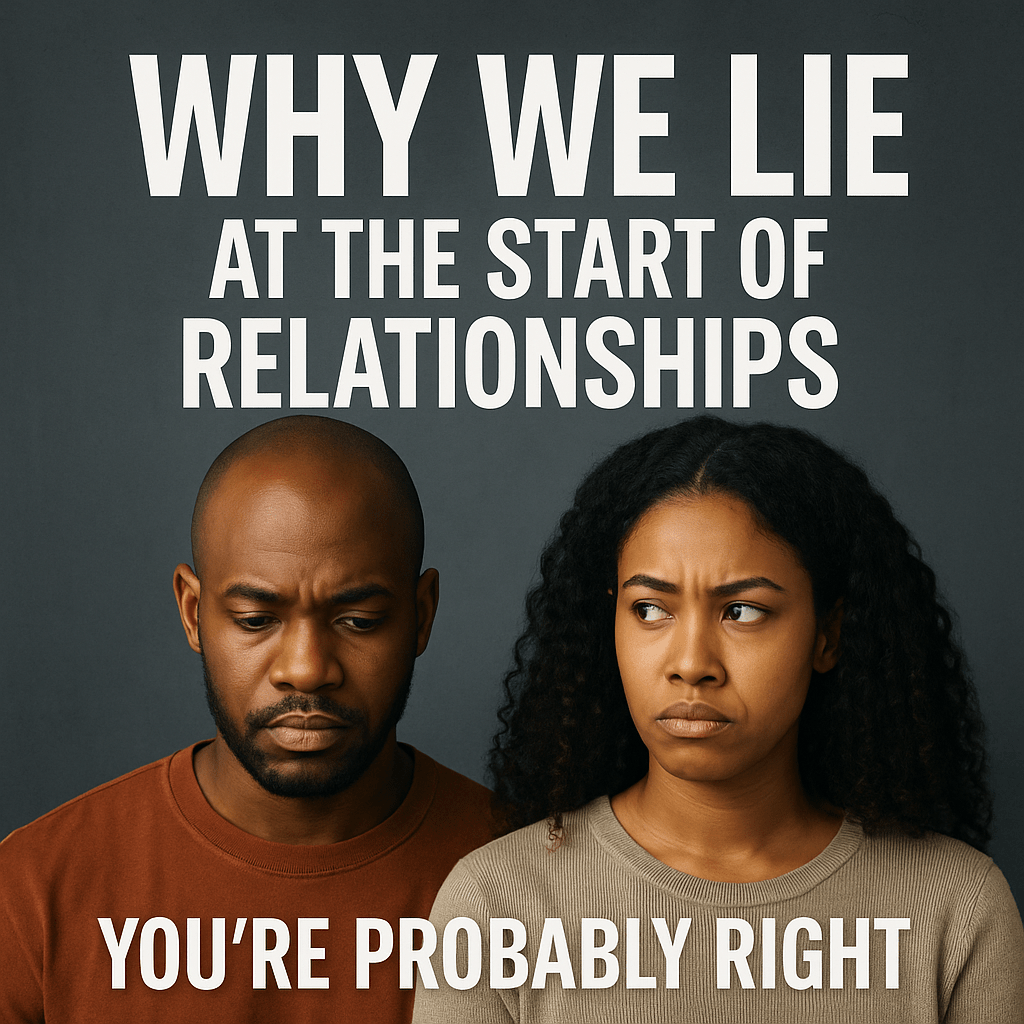
Why Is It So Hard to Tell the Truth at the Start of a Relationship?
The Question of Truth in New Relationships
Why is it so hard to tell the truth at the very beginning of a relationship? It’s a question I’ve asked myself, and perhaps you have too. In those early stages of dating or courtship, when honesty is arguably most crucial, many of us struggle to be fully transparent. We hold back facts about our past, we gloss over our flaws, or we pretend to like things we don’t. Ironically, this is the time when setting a foundation of truth would save us so much future heartache – yet we often shy away from it. What drives this impulse to hide our true selves right when openness could benefit us most? As I’ve reflected on my own experiences and studied others’, a common theme emerges: fear and self-worth. The lower our self-worth or the higher our desperation, the more tempting it is to bend the truth. In contrast, when we’re secure in our own value, honesty comes much more naturally.
Desperation vs. the Confidence of Self-Worth
In many cases, how desperate we feel for love or approval will determine how much truth we’re willing to tell. When someone is extremely eager not to “mess up” a new relationship, they might hide aspects of themselves, fearing that the truth will scare the other person away. This often stems from a place of low self-esteem or past hurt. Psychology tells us that low self-esteem is toxic for dating – it pushes people to seek validation at all costs and even to “shape-shift” into whatever they think others want.
In other words, if I’m deeply insecure, I might lie about or downplay parts of myself so that you’ll like me. I’ll laugh at jokes I don’t find funny, agree with opinions I actually disagree with, maybe even pretend to have hobbies I have zero interest in – all in an effort to seem more attractive or compatible. This chameleon act is a hallmark of desperation. And while it might temporarily win someone’s approval, it sets up a false persona that I then have to live up to.
By contrast, if I have a healthy confidence in my own self-worth, I won’t feel the need to lie. Having self-worth doesn’t mean arrogance or thinking I’m above anyone; it simply means recognizing that I have value equal to any other person. With that mindset, I approach a new relationship knowing that if I’m truthful and the other person walks away, it’s okay – it just means we weren’t the right fit. I don’t have to beg or perform for love.
In fact, mental health experts note that low self-esteem often leads people to accept poor treatment in relationships because they don’t believe they deserve better. I have lived that reality myself: in times when I felt worthless, I put up with far too much and kept parts of myself hidden, thinking I had to do so to keep someone around. It never led to lasting happiness – only to losing myself.
When you believe “I bring something valuable to the table,” you are freed up to be honest. You trust that the right person will appreciate you as you are, and you’re not obligated to deceive anyone to earn basic respect.
Famed psychologist Jordan Peterson has a rule: “Tell the truth, or at least don’t lie.” He argues that lying, even with good intentions, only weakens us and our relationships – whereas choosing honesty opens the door to a more meaningful life. In my own life, I’ve found that to be painfully true. Every lie I told out of desperation ultimately led to more insecurity, not less. Every truth I’ve dared to share, even when I was afraid, ultimately made me stronger or clarified who was truly meant to be in my life.
 You're Probably Right Podcast